Thinking about buying a rental outside the Twin Cities? Northfield may be worth a serious look if you want a smaller market with multiple demand drivers, tight vacancy, and a more manageable scale than many metro-area investment options. If you are weighing where to place your next dollar, this guide will help you understand Northfield’s rental landscape, what to underwrite carefully, and where local rules can affect your numbers. Let’s dive in.
Why Northfield stands out
Northfield is not just a small town south of the metro. It had an estimated 21,316 residents in 2024 and 6,380 households in the 2020-2024 Census estimate period, with a 69.3% owner-occupied rate. That means it remains primarily owner-occupied, but it still supports a meaningful rental market.
The city also has more than one source of rental demand. Northfield is home to St. Olaf College and Carleton College, and local commuting data show that more workers commute into Northfield than leave it. For you as an investor, that points to a market supported by both education and employment activity.
Northfield’s median household income was $84,895 in the 2020-2024 estimate period, and the median value of owner-occupied homes was $329,400. Those numbers help frame the market as a stable, smaller-city environment rather than a one-note college rental market. That matters when you are evaluating tenant demand over a longer hold period.
What the rental market looks like
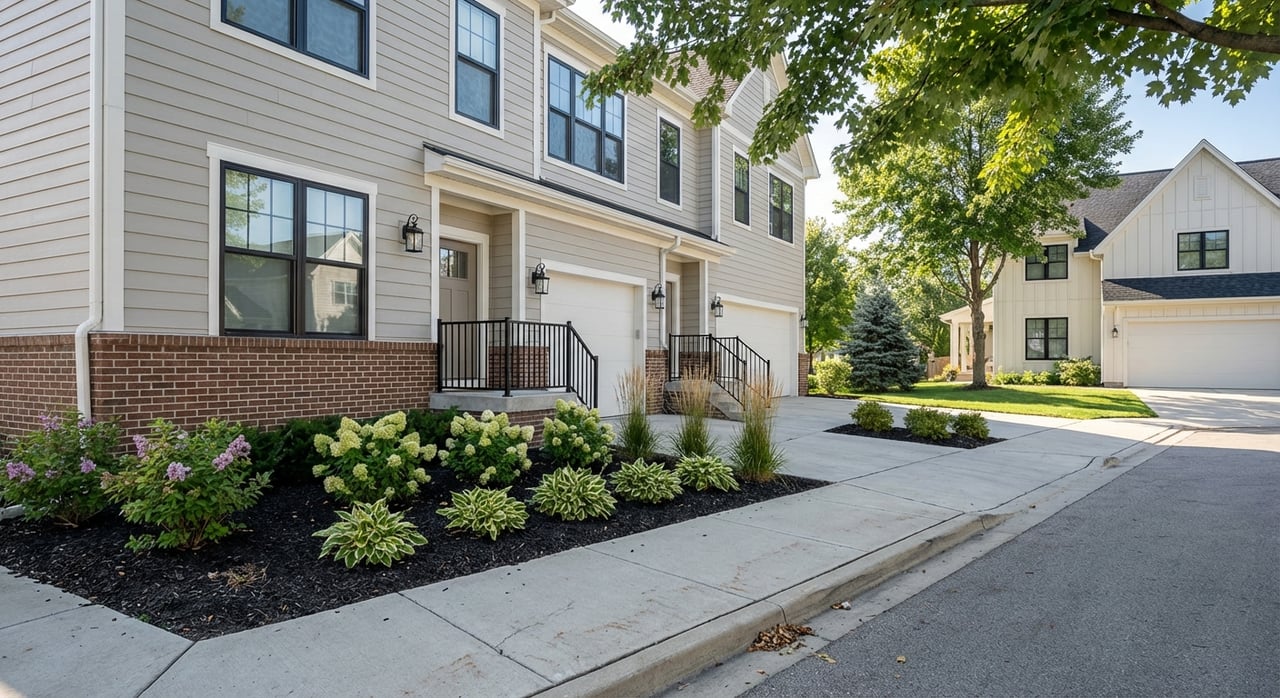
Northfield’s rental stock is mixed, which gives you more than one possible entry point. According to the city’s housing analysis, the most common rental building sizes are 10-19 units at 19.7% of renter-occupied units and 20-49 units at 15.1%. At the same time, rented single-family homes make up 14.5% of renter-occupied units, and townhomes account for 9.6%.
That mix is important if you are coming from the Twin Cities and assuming apartment buildings are the only play. In Northfield, small multifamily may be the dominant format, but single-family rentals and townhomes still make up a meaningful share of the market. You do not have to limit your search to one property type.
Another key point is age. The median year built for rental housing is 1975, which suggests many rentals are older properties. If you are evaluating cash flow, you should expect more variance in condition, maintenance needs, and inspection readiness than you might see in newer suburban product.
Compare rents by property type
One of the biggest mistakes investors make is treating all Northfield rents as interchangeable. The city’s housing analysis estimated median contract rent at $1,220 in 2024, while Census QuickFacts reported median gross rent of $1,103 for 2020-2024. These are different measures, so you should not plug them into your underwriting as if they mean the same thing.
A better approach is to compare like with like. The city report estimated stabilized market-rate units averaged $990 overall, with average rents around $986 for one-bedrooms, $1,230 for two-bedrooms, and $1,810 for three-bedrooms. Newer market-rate properties were much higher, with rents around $1,300 for studios and up to $2,100 for two-bedrooms.
That rent spread tells you a lot. Older stock, newer amenity-rich properties, and single-family rentals do not perform the same way. If you are underwriting a 1970s-era building, your rent assumptions should reflect that product category, not the top end of the newer market.
Newer properties typically justify higher rents because they often include in-unit washer and dryers, stainless appliances, enclosed parking, and more common-area amenities. Those features help explain the premium. If your property does not offer that level of finish or convenience, your pro forma should stay grounded in older-stock rent bands.
Vacancy is tight in Northfield
Northfield’s rental market is tight by almost any standard in the city’s housing analysis. The report found 0.8% vacancy among stabilized market-rate properties and 2.4% overall market-rate vacancy. The consultant’s cited equilibrium benchmark was 5%, so Northfield is operating well below that level.
Affordable units were even tighter, with 0.7% vacancy. For a buy-and-hold investor, this supports the idea that tenant demand is not the main issue. In many cases, the bigger challenge is buying at a price that still leaves room for repairs, turnover costs, and realistic rent growth.
Low vacancy is a positive sign, but it should not lead you to underwrite aggressively. Tight markets can still punish buyers who overpay or underestimate capital needs. In Northfield, discipline on acquisition price and renovation scope matters just as much as demand.
Supply is limited, and future demand looks solid
Northfield’s housing pipeline appears constrained. The city report identified 131 vacant residential lots that could support housing, and it said the city issued 1,047 new residential units from 2001 through 2023. From 2020 to 2023, that averaged 82 units per year.
That is not a flood of new supply. In a market with tight vacancy, limited land for future housing can support the long-term case for rental ownership. It does not guarantee performance, but it helps explain why vacancy has remained so low.
The city’s housing needs analysis projected demand from 2024 through 2035 for 445 market-rate rental units, 163 affordable rental units, and 102 subsidized rental units. That forecast suggests continued need across multiple rental segments. For you, this reinforces the value of choosing a strategy that matches the local product type and your risk tolerance.
Three underwriting buckets to use
If you are investing in Northfield, it helps to sort opportunities into three practical buckets. This makes your search and analysis more consistent, especially if you are comparing several properties at once.
Older stable rentals
This bucket includes many of the city’s existing rentals, especially properties built around the 1970s. These assets may offer lower headline rents, but they can still fit a long-term hold strategy if the purchase price and repair budget make sense.
With this type of property, you should focus closely on unit condition, mechanicals, deferred maintenance, and inspection readiness. Because the median rental housing year built is 1975, it is wise to build in reserves rather than assume a smooth handoff after closing.
Newer amenity-rich properties
These properties sit at the higher end of the local rent range. They can command stronger rents, but they also tend to come with a higher acquisition basis.
If you are considering a newer asset, make sure the premium is supported by real features and real rent comparables. In Northfield, newer product often includes better in-unit features and shared amenities, which supports higher pricing. Even so, your return depends on whether the numbers still work after financing, vacancy assumptions, and operating costs.
Affordable or voucher-oriented rentals
Northfield also has a meaningful affordability component. The city report estimated average rents of roughly $830 to $876 for affordable or subsidized units.
The same analysis said about 80% of existing renter households could afford an existing one-bedroom at roughly $900 per month, while only 66% could afford a new one-bedroom at about $1,400 per month. That gap matters because it highlights where broader renter affordability may support demand.
If you are considering voucher-backed leasing, the city report said Rice County HRA managed 385 Housing Choice Vouchers and had 277 in use at the time of the study. That suggests a real voucher ecosystem, but also limited program capacity as rents rise. This can be a viable strategy, but it requires careful understanding of compliance and local program realities.
Know Northfield’s rental license rules
Before you buy, you should understand one of the most important local operating rules in Northfield: a rental license is required before any residential rental property is occupied. That includes short-term rentals. This is not a minor detail, because it can affect your post-closing timeline and your early cash flow.
After a sale, the new owner must apply for a new license within 30 days. If a new license is not issued within 60 days, the property must stop being rented until it is licensed again. For an investor, this means transition planning matters from day one.
The ordinance also requires an interior and exterior inspection, with at least 75% of units inspected before a new or renewed license can be issued. On a small multifamily property, that can affect your turnover planning, access coordination, and timeline to stabilize operations. If you are buying an older asset, give yourself room in the budget and schedule.
Budget for fees and re-inspections
Northfield’s 2026 fee schedule includes several direct licensing costs. Rental license Type 1, which covers two years, is $110 for the first unit. Type 2, a one-year license, is $350, and Type 3, a six-month license, is $290.
Temporary licenses are $110. There is also a $75 re-inspection fee after a cancelled, no-show, or second inspection, plus a $250 fine for renting without a rental license. These amounts may not break a deal on their own, but they belong in your operating model.
This is especially true if you are buying an older property that may need repair work before passing inspection. Small compliance costs can become larger cash-flow issues if your timeline slips or units cannot legally remain occupied during the licensing process.
What about short-term rentals?
If you are considering a short-term rental strategy, Northfield says the same rental licensing process applies. That means you should not assume a lighter path just because the property is not being leased in a traditional long-term format.
The city also says that owners who do not use a booking platform that automatically collects local lodging tax must file and pay lodging tax monthly. If short-term rental is part of your plan, make sure you factor in both licensing compliance and the tax administration side before you buy.
What Twin Cities buyers should watch most
If you are based in the Twin Cities, Northfield can look attractive because of its tight vacancy, mixed demand base, and smaller scale. Still, this is not a market where you should rely on broad averages alone. Property type, age, rent band, and licensing readiness all matter.
A smart Northfield acquisition usually comes down to a few basics:
- Buy at a basis that leaves room for repairs and turnover
- Underwrite rents based on true comparable product type
- Account for licensing timing after closing
- Expect older properties to need more reserves
- Match your strategy to the right bucket: older stable, newer premium, or affordability-focused
For many investors, Northfield appears strongest as a long-term hold market. The combination of tight vacancy, limited supply, and projected rental demand through 2035 supports that view. But as with any investment, execution matters just as much as market story.
If you want help evaluating a Northfield rental from a Twin Cities investor’s perspective, working with a team that understands local numbers, timelines, and acquisition strategy can save you time and reduce surprises. Connect with Huerkamp Home Group to talk through available opportunities and your next move.
FAQs
What makes Northfield, MN attractive for rental investors?
- Northfield offers a mix of rental demand from local employment, commuting patterns, and two colleges, along with very tight vacancy and projected rental demand through 2035.
What are average rents for Northfield rental properties?
- The city’s housing analysis estimated stabilized market-rate rents around $986 for one-bedrooms, $1,230 for two-bedrooms, and $1,810 for three-bedrooms, while newer properties were higher.
Are rental vacancies low in Northfield, MN?
- Yes. The city analysis reported 0.8% vacancy for stabilized market-rate properties and 2.4% overall market-rate vacancy, both below the 5% equilibrium benchmark cited in the report.
Do you need a rental license in Northfield, MN?
- Yes. Northfield requires a rental license before a residential rental property can be occupied, including short-term rentals.
How soon must a new owner apply for a Northfield rental license?
- After a sale, a new owner must apply for a new rental license within 30 days, and if a new license is not issued within 60 days, the property must stop being rented until licensed again.
What property types work best for Northfield rental investing?
- Northfield can fit several strategies, including small multifamily, select single-family rentals, townhomes, and affordable-oriented rentals, depending on your budget and hold plan.